
Blog
Food, Light, and Sound: The Sensory Formula of Las Vegas
Anyone who has spent time in Las Vegas knows that it’s unlike any other city out there, and that’s not by accident.
Throughout the city, you can see some really interesting design tactics, such as specific lighting choices, compressed entryways, reflective materials, directional sound, and unique dining concepts that shape how people move, how long they stay, and what they remember. Once you start noticing those details, you can see the sensory formula in action.
Let’s highlight a few of these smart choices and how they help create the Sin City experience we know.
Lighting As Design & Experience
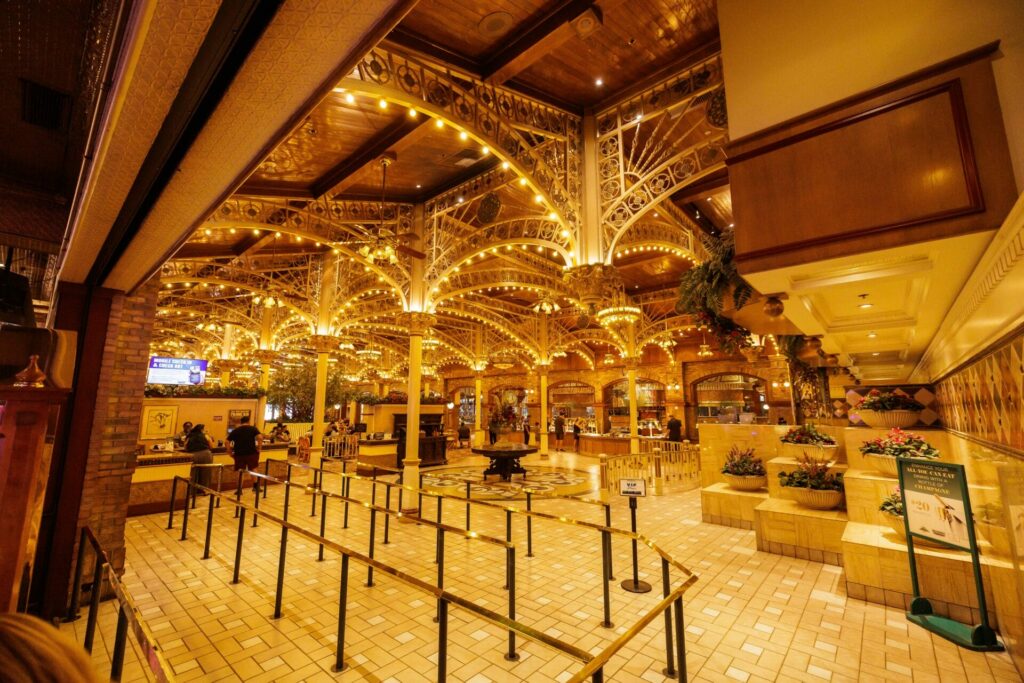
Almost every resort in Las Vegas has its own unique lighting design that not just serves as a utility, but is part of the whole experience.
For example, the Bellagio casino floor uses a consistent palette of warm, golden light with minimal contrast between zones. There are no sharp transitions between walkways and gaming areas, which makes it easier for guests to subtly move between spaces. This keeps them on the floor longer as they explore everything there is to see and do.
In contrast, The Cosmopolitan has unique spaces for guests to experience separately. For example, at The Chandelier, lighting is used to physically change how the space feels from level to level. On the lower floors, dense crystal strands scatter light and tighten sightlines, making the space feel enclosed and slower-paced. As you move upward, the lighting becomes clearer and more direct, increasing visibility and energy.
Nightclubs in Las Vegas take a more kinetic approach. Moving LED ceilings and programmable lights, like at OMNIA Nightclub, create constant visual change. That movement increases the energy in the space and keeps it from feeling too static. Time can pass in an instant in a space perfectly designed for all-night adventures.
Of course, we can’t talk about lighting without talking about the Fremont Street Experience. Here, lighting is such a huge part of the experience with giant neon signs marking hotels and casinos and The Canopy™, the world-famous LED experience. The Canopy stretches 1,375 feet overhead with sweeping LED visuals.
Thoughtfully Crafted Sound Design
Sound design is also part of the Las Vegas formula for top-tier experiences.
On casino floors, patterned carpet and upholstered seating aren’t just aesthetic choices. They absorb foot traffic and ambient noise, allowing the constant slot machine audio to be the center stage.
Likewise, sound is minimized at high-end restaurants through the clever use of thick carpeting and doors, upholstered walls, and plenty of space between tables. These tricks make it possible to be on the loud, exhilarating casino floor one second and dining in an intimate setting the next.
At most nightclubs in Las Vegas, sound is zoned and designed around the overall experience. For example, at XS Nightclub, the indoor dome concentrates bass and volume, while the outdoor pool area diffuses it. Guests naturally redistribute themselves based on the energy they’re looking for, which helps for traffic control and also the quality of the experience.
Dining Spaces That Control Focus and Flow
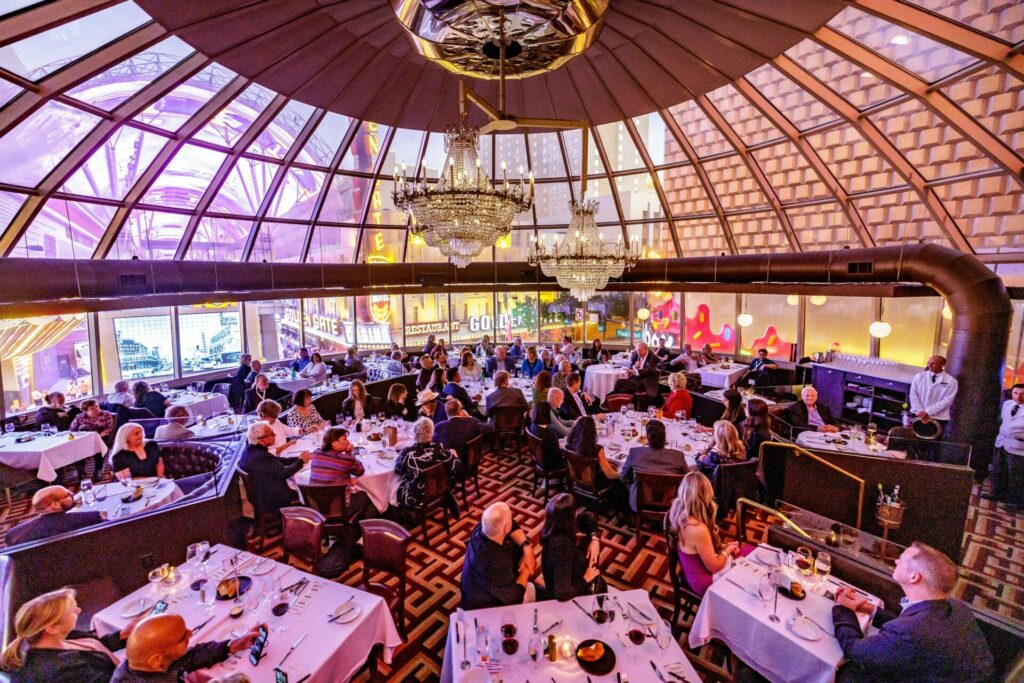
Talking about the intentional design of Las Vegas restaurants could be a whole discussion in itself, but we can include a few highlights here as we talk about the sensory formula of the city.
Best Friend uses one of the clearest examples of spatial manipulation on the Strip. The entrance compresses guests into a narrow, brightly lit “corner store” before opening into a darker, louder dining room. That transition heightens contrast and makes the main space feel even more energetic.
At Superfrico, visual and auditory stimuli are layered intentionally. Live performers, shifting lighting, and eclectic décor create controlled chaos, which keeps guests there longer to experience it all.
On the opposite end of the scale from a restaurant like Superfrico, Omakase counters across Las Vegas are small and intimate, making the chef and their creations part of the design. With limited seats and direct chef interaction, the layout removes any distractions. The closer you are, the more engaged you are, and the longer you stay.
Bringing the Outside In
Biophilic design, or the practice of connecting people with nature (even in urban environments), is a really creative way to keep guests in Las Vegas in touch with things outside of the casino floor.
The Mirage was one of the first resorts on the Strip to incorporate this design choice into its blueprint. The dense tropical atrium, layered with real plants, humidity, and water features, created a noticeable shift from the dry, controlled casino floor. Outside, the volcano added heat, sound, and kinetic energy in a physical way for guests to enjoy. This immersive design made it a standout choice for visitors.
Today, we still see biophilic design in modern casinos. The Bellagio Conservatory & Botanical Garden is one of the most iconic examples. The 14,000-square-foot Botanical Gardens is a showcase of inspiring sights, sounds, scents and colors.
You can also see biophilic design at the many luxurious pools in Las Vegas. For example, the outdoor pool and garden areas at Resorts World use landscaping and shade to create transitions between high-energy interiors and slower exterior spaces. The resort has four different pools and all of them use natural elements in their design.
The Methods Behind the Design
How guests experience Las Vegas is not an accident. Compressed entryways that lead into open rooms, warm, diffused lighting in transitional spaces and high-contrast lighting in focal areas, and loud environments paired with quiet ones are just a few of the sensory details that experts spend their whole careers designing.
Las Vegas is less like a collection of venues and more like a coordinated sensory system designed to keep you moving, staying, and coming back.
Sources
- Living Future. Biophilic Design. https://living-future.org/biophilic-design/
- Marymount University. Lighting Design Techniques to Transform Interior Spaces. https://marymount.edu/blog/lighting-design-techniques-to-transform-interior-spaces
- Falmouth University. The Psychology of Space: How Interiors Shape Our Behaviour. https://www.falmouth.ac.uk/news/psychology-space-how-interiors-shape-our-behaviour
- Architectural Digest. Las Vegas Design Travel Guide. https://www.architecturaldigest.com/story/las-vegas-design-travel-guide
- Fremont Street Experience. The Canopy™. https://vegasexperience.com/the-canopy/
- The University of Texas Permian Basin. The Psychology of Gambling Connection: How Hideous Carpets and Hormones Keep Us Betting. https://online.utpb.edu/about-us/articles/psychology/the-psychology-gambling-connection-how-hideous-carpets-and-hormones-keep-us-betting/
- Resonics. The Complete Guide to Reducing Noise in Restaurants. https://resonics.co.uk/our-blog/the-complete-guide-to-reducing-noise-in-restaurants/
- Remick Architecture. The Psychology of Restaurant Design: How Space Influences Social Interaction. https://remickarch.com/2025/03/the-psychology-of-restaurant-design-how-space-influences-social-interaction/
- ANFA (Academy of Neuroscience for Architecture). Exploring Multi-Sensory Design in Architecture: Insights from Betsy Nolan’s Presentation. https://anfarch.org/research-topics/sensory-perception-and-the-built-environment/page/exploring-multi-sensory-design-in-architecture-insights-from-betsy-nolans-presentation/